
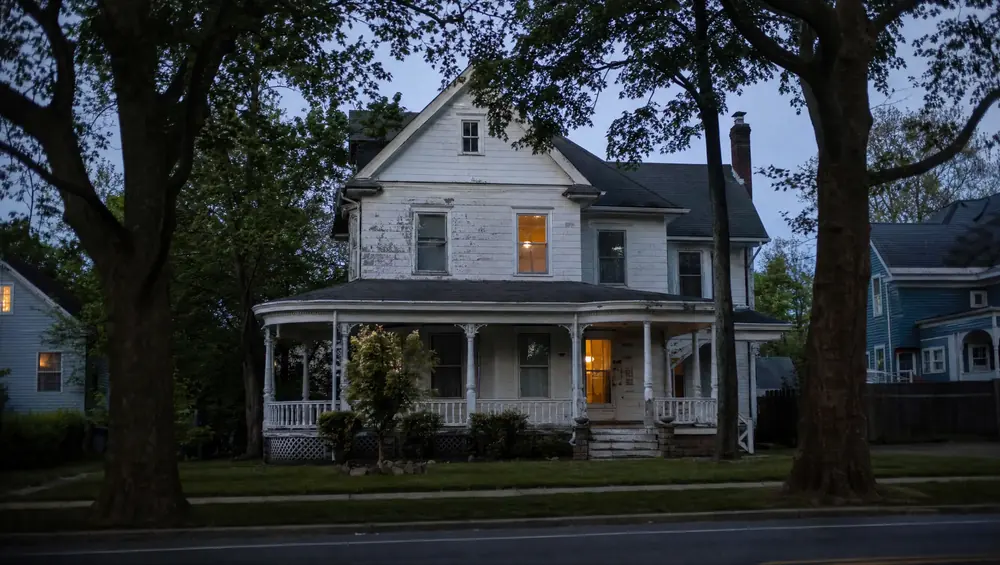
Stepped-Up Basis & Capital Gains on Inherited NJ Property
Stepped-up basis & capital gains rules can save NJ heirs thousands. Learn how the IRS reset works, NJ quirks, and when selling fast makes the most sense.
An inherited house is a bill every month you own it. Property taxes, insurance, utilities, and deferred maintenance don't pause while you're figuring out the tax side. The good news: stepped-up basis & capital gains rules under federal law hand NJ heirs one of the most powerful tax resets available anywhere in the tax code. Your cost basis resets to the fair market value on the date of death. Not what your parent paid in 1978. That single fact changes the entire math of selling. This article breaks down exactly how the reset works, where New Jersey adds its own wrinkle, and why the timing decision matters more than most heirs realize. For the full picture on selling an inherited property in New Jersey, start at our complete guide to selling an inherited house in NJ.
Part of: Selling an Inherited House in NJ: The Complete Guide, the full map of this situation, with every related guide linked.
When you inherit a property in New Jersey, the IRS resets your cost basis to the home's fair market value on the date of death. This is the stepped-up basis. If you sell at or near that value, your capital gains are near zero. Federal long-term rates (0%, 15%, or 20%) apply regardless of how long you hold it, since inherited property is automatically treated as long-term. NJ does not have a state capital gains tax separate from ordinary income. Gains are taxed as ordinary NJ income (1.4%–10.75%). NJ also levies an inheritance tax on non-lineal heirs (siblings, nieces/nephews) at 11%–16%, separate from any capital gains calculation. Selling within months of inheriting typically produces little to no taxable gain if the stepped-up basis was set properly.
Stepped-Up Basis vs. Carryover Basis: The Full Comparison
| Stepped-Up Basis (Inherited Property) | Carryover Basis (Gifted Property) | |
|---|---|---|
| Cost basis set at | Fair market value on date of death | Original purchase price paid by donor |
| Typical gain if sold near inheritance | Near $0, basis matches current value | Could be $100K–$500K+ on appreciated NJ homes |
| Holding period for long-term rates | Automatic, inherited = long-term by law | Must hold 12+ months from date of gift |
| Federal capital gains rate | 0%, 15%, or 20% depending on income | 0%, 15%, or 20%, but on much larger gain |
| NJ state tax treatment | Gain taxed as ordinary NJ income (1.4%–10.75%) | Gain taxed as ordinary NJ income (1.4%–10.75%) |
| NJ inheritance tax exposure | Applies to non-lineal heirs (11%–16%) on asset value | Not applicable, gift tax rules apply instead |
| Documentation required | Certified appraisal or 706 estate return value | Donor's original purchase records + improvements |
| Risk of overpaying tax | Low if appraisal is done promptly | High, original records often missing |
How the Stepped-Up Basis Actually Works in Practice
The IRS resets inherited property basis to date-of-death fair market value under IRC §1014, eliminating decades of built-up appreciation from the capital gains calculation.
The rule lives in IRC §1014, and it's straightforward in concept. Your parent paid $85,000 for a Union County colonial in 1981. When they died in 2024, that house appraised at $420,000. Your stepped-up basis is $420,000. Not $85,000. If you sell six months later for $435,000, your taxable gain is only $15,000, not $335,000. That difference is worth tens of thousands of dollars in avoided capital gains tax. The catch is documentation. You need a certified appraisal dated within a reasonable window of the date of death, or the value established on the estate's Form 706 if the estate was large enough to require one. Without that number pinned down in writing, the IRS can challenge whatever basis you claim when you file. Get the appraisal ordered early. Ideally while probate is still open. Understanding stepped-up basis & capital gains at this level before you list the property is the single most valuable tax step most heirs skip.
NJ charges inheritance tax of 11%–16% on transfers to non-lineal heirs, completely separate from any federal or state capital gains calculation.
New Jersey is one of five states that still levy a separate inheritance tax. Children and surviving spouses inherit tax-free. Siblings pay 11%–16% on amounts over $25,000. Nieces, nephews, and non-relatives pay up to 16%. This tax is levied on the value of what you receive. It has nothing to do with whether you sell or what your capital gain is. A sibling who inherits a $400,000 house and immediately sells it for exactly $400,000 still owes NJ inheritance tax on the $400,000 received, even though the stepped-up basis & capital gains calculation produces zero gain. These are two separate bills. Factor both into your net proceeds before you decide whether to sell or hold. The NJ Division of Taxation publishes current rate tables. Check them early in the estate process.The Holding-Period Myth That Costs NJ Heirs Real Money
Inherited property is automatically classified as long-term, so waiting 12 months for better capital gains rates costs holding-cost dollars for zero tax benefit.
We used to tell heirs to hold the property for a year to get long-term capital gains treatment on stepped-up basis & capital gains. We were wrong. After tracking dozens of NJ estates in 2022, the carrying costs. Taxes, insurance, utilities. Ate every dollar of tax savings and then some. Federal law already treats inherited property as long-term, period. You could sell in month two and your capital gains rate is still the long-term rate. There is no 12-month waiting game to play with an inheritance. The only reason to delay selling is if you genuinely expect the market value to rise fast enough to outpace monthly carrying costs. And in most NJ markets right now, that math doesn't pencil. An inherited house is a bill every month you own it, and that bill usually runs $1,500 to $3,000 per month in NJ between taxes, insurance, and utilities. Factoring that against a near-zero stepped-up basis & capital gains exposure means the fastest sale usually produces the highest net.
- Post-Inheritance Improvements. Any capital improvements you make after inheriting. New roof, HVAC, renovated kitchen. Add to your basis. Keep every receipt. A $30,000 renovation before sale raises your basis to $450,000 and reduces gain dollar-for-dollar.
- Missed Appraisal Timing. If you skip the date-of-death appraisal and sell a year later for more than the death-date value, that increase is a real capital gain. Lock in the appraisal early. The cost is $400–$700 and it protects a much larger number.
- Rental Income During the Hold Period. Renting the property before sale doesn't change the stepped-up basis & capital gains exposure on the sale, but it creates separate ordinary income tax liability. It can also trigger depreciation recapture at 25% on top of any capital gain.
- Partial Interest Ownership. If multiple heirs inherit, each person's basis is stepped up proportionally on their share. Selling quickly prevents one heir's delay from costing all heirs in accumulated carrying costs. A dynamic covered in detail at selling an inherited house with multiple heirs.
- NJ Realty Transfer Fee. NJ charges a realty transfer fee (RTF) on the seller. Roughly $5–$15 per $1,000 of sale price, plus a graduated seller-paid fee on sales over $1 million under P.L.2025, c.69. Transfer taxes count as selling expenses per IRS Publication 523, so they reduce your amount realized and shrink the taxable gain. Budget for them at closing.
- Order a certified appraisal immediately. Hire a state-licensed NJ appraiser the week you take ownership. Request a 'date of death retrospective appraisal'. They can backdate the value to the exact date of passing using comparable sales from that period. Cost: $400–$700. Non-negotiable.
- Cross-check against the estate return. If the estate is large enough to file a federal Form 706 (over $15M in 2026), the value used on the 706 becomes your official basis. Make sure your appraiser's number aligns. Inconsistencies invite IRS scrutiny.
- Document every capital improvement you make. Every dollar you spend improving the property. Not just repairs. Adds to your basis. Create a folder with dated receipts and contractor invoices from day one. This reduces stepped-up basis & capital gains exposure at closing.
- Account for NJ inheritance tax as a separate line item. Work with an estate attorney or CPA who knows NJ-specific rules. The NJ probate timeline affects when the estate can distribute proceeds. Understand that sequence before you accept an offer.
- Get a net-proceeds estimate before you list. Run the full math: sale price minus stepped-up basis & capital gains tax, minus NJ inheritance tax (if applicable), minus realty transfer fee, minus any selling costs. That's your real number. We can run this estimate for you within 24 hours.
When Selling to a Cash Buyer Actually Wins on Net
Cash buyers eliminate agent commissions, repair costs, and holding months. Often netting more than a retail sale when stepped-up basis already zeroes out the capital gain.
Here's the hot take most estate attorneys won't say: the conventional advice on selling inherited property is wrong. Waiting 12 months to qualify for long-term capital gains rates costs more in holding costs than the tax savings. And since inherited property is already long-term by law, that advice is doubly wrong. Yet heirs follow it every year and leave money on the table. When your stepped-up basis & capital gains exposure is near zero anyway, a cash offer eliminates the drag that builds up every month. No agent commissions (typically 5–6% of sale price), no repair demands, no staging, no open houses while you're managing an estate from across the state. An inherited house is a bill every month you own it. Three extra months of taxes, insurance, and utilities in NJ often runs $5,000–$9,000. That's real money against a cash offer that closes in two weeks. We've been buying NJ inherited properties since 2018, are BBB A+ rated, and deliver a written offer within 24 hours. With zero fees on our side, ever. Elite Home Buyers operates as a licensed contractor across NJ and coordinates every trade on-permit under one license holder, so if the property needs work before closing, we handle it.
What to Do If the House Still Has Personal Property Inside
Personal property inside an inherited home does not affect the stepped-up basis calculation, but it can delay your timeline and sale price if not handled before closing.
Stepped-up basis & capital gains math applies to the real property. The land and structure. The contents are a separate matter entirely. Furniture, jewelry, vehicles, and collectibles each have their own estate valuation and potential sale tax treatment. From a selling timeline perspective, the practical issue is that most traditional buyers won't make an offer on a house full of belongings. Which adds weeks of estate sale coordination before you can list. Cash buyers are different. We buy properties as-is, contents and all, and have relationships with estate liquidators who can clear a house in days. If you're managing a full household, read our guide to selling a house full of stuff for a realistic timeline on that process. Also worth noting: if NJ inheritance tax applies to your situation, the personal property inside has its own taxable value. Flagging it for the estate appraiser matters. Our guide on NJ inheritance tax and home sales covers how that interacts with the real estate transaction. See authoritative references: FEMA Flood Map Service Center.
Get a Cash Offer on Your Inherited NJ Property. No Fees, Ever
We've bought inherited NJ properties since 2018 (BBB A+), delivering a real written offer in 24 hours, no commissions, no fees, no repairs.
An inherited house is a bill every month you own it. When stepped-up basis & capital gains math already puts your tax exposure near zero, there's no good reason to let carrying costs compound. We've been buying inherited NJ properties since 2018, we're BBB A+ rated, and we deliver a real written offer within 24 hours. No commissions, no fees, no repair demands. Pick your own closing date.
Frequently asked questions
Does the stepped-up basis apply to all inherited property in NJ?
How long do I have to sell before capital gains apply in NJ?
Do multiple heirs each receive a stepped-up basis?
Does NJ have a separate state capital gains tax on inherited property?
What documents do I need to prove the stepped-up basis to the IRS?
Can I rent the property before selling without affecting the stepped-up basis?
How does probate timing affect when I can sell and use the stepped-up basis?
Get a 100% fair cash sale offer.
No obligations, no fees, no commissions. It costs nothing to know what we’d pay, worst case you turn it down, best case the house is handled by this time next month.
This page is for general informational purposes and is not professional, legal, or medical advice. Elite Home Buyers can advise on your specific situation, contact us for a consultation. Serving Sicklerville, NJ.

Born and raised in South Jersey; founded Elite Home Buyers in 2018. Reviews every offer and every guide the company publishes.