
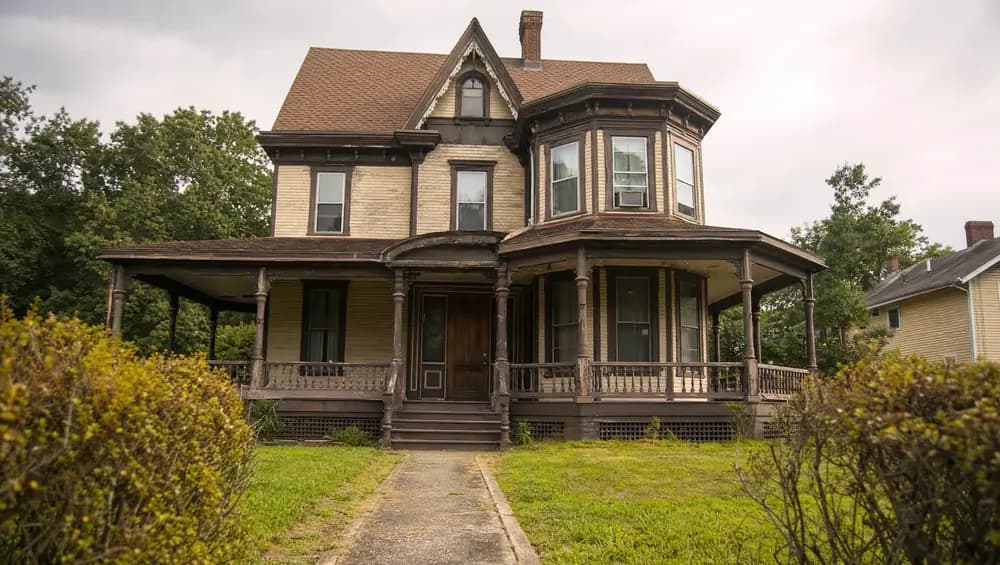
Selling an Inherited House in NJ: The Complete Guide
Selling an inherited house in NJ involves probate, taxes, and timing decisions. Learn every option, cost, and timeline. And get a cash offer in 24 hours.
An inherited house is a bill every month you own it. Property taxes, utilities, insurance, and deferred maintenance don't pause because a family is grieving. We've worked with NJ heirs since 2018 and we've watched the same pattern repeat: families delay decisions for months, rack up carrying costs, and then feel rushed at the worst possible time. This guide is our attempt to fix that. Selling an inherited house in NJ touches probate law, state estate tax, step-up basis rules, and a local real-estate market that varies wildly from Hudson County to Cape May. We'll cover every sale option with real numbers, walk you through the probate timeline, and give you a plain-English breakdown of NJ-specific rules you actually need to know.
| In this series | Deep-dive |
|---|---|
| NJ probate timeline for real estate | Read → |
| Selling with multiple heirs | Read → |
| NJ inheritance tax | Read → |
| Stepped-up basis & capital gains | Read → |
| Selling a house full of stuff | Read → |
Selling an inherited house in NJ typically takes 3 to 12 months depending on whether probate is required. NJ probate averages 6-9 months; when someone dies without a will, small estates can sometimes skip full administration with a Surrogate's affidavit (up to $50,000 for a surviving spouse or partner, $20,000 for other heirs). NJ imposes an Inheritance Tax (not estate tax) on most non-spouse, non-child beneficiaries. Rates run 11-16%. A step-up in basis usually reduces capital gains to near zero if you sell quickly. Cash buyers can close in as few as 14 days once the executor has legal authority to transfer title. Agent-listed sales add 4-6 months and 5-6% in commissions on top of any repair costs.
Your Three Sale Options: Costs, Timelines, and Trade-Offs at a Glance
| Cash Buyer (Elite Home Buyers) | Traditional Agent Listing | |
|---|---|---|
| Time to Close | 14-21 days | 4-6 months |
| Commission / Fees | $0 | 5-6% of sale price |
| Repairs Required | None (sold as-is) | Often $10K-$40K before listing |
| Showings / Staging | None | Multiple open houses, staging costs |
| Offer Timeline | Within 24 hours | Days to weeks on market |
| Certainty of Close | High (no financing contingency) | Moderate (buyer financing can fall through) |
| Best For | Estates needing speed, out-of-state heirs, deferred maintenance | Turnkey homes with equity to maximize |
NJ Probate 101: What Has to Happen Before You Can Sell
NJ probate typically takes 6-9 months; the executor must be appointed by the Surrogate's Court before any sale can close.
Before selling an inherited house in NJ, someone must have legal authority to transfer title. That authority comes from the Surrogate's Court in the county where the deceased lived. Filing for probate requires the original will (if one exists), a death certificate, and a filing fee that ranges from roughly $135 to $200 depending on the county. The Surrogate then issues Letters Testamentary to the executor, or Letters of Administration if there is no will. That document is what the title company and any buyer need to see before closing. The NJ Surrogate's Court Association publishes the official filing requirements for each of New Jersey's 21 counties. Requirements vary slightly, so check your specific county's Surrogate. Once the executor has Letters, they can list or sell the property. The estate still needs to settle NJ inheritance tax: taxable estates file Form IT-R, while estates passing entirely to exempt Class A beneficiaries (spouse, children, grandchildren, parents) can request the real estate waiver with Form L-9. NJ's separate estate tax was repealed for deaths on or after January 1, 2018. The estate must also satisfy creditor claims before distributing proceeds to heirs. Most NJ title companies won't insure a sale until a Tax Waiver from the Division of Taxation is in hand. That waiver alone can add 4-8 weeks to the timeline. When an inherited property has occupants who are not ready to leave, a cash for keys agreement is often the cleanest way to resolve it without an eviction.
The Step-Up in Basis Rule: Your Biggest Tax Advantage
Step-up in basis resets the inherited property's cost to its fair market value at the date of death, eliminating most capital gains for heirs who sell quickly.
This is the rule that most heirs don't know. And it's worth real money. When you inherit a property, the IRS resets your cost basis to the fair market value on the date the owner died. If your parent paid $80,000 for a home in 1985 and it's worth $380,000 today, your basis is $380,000. Not $80,000. Sell it for $390,000 and you only owe capital gains on $10,000, not $300,000. The IRS calls this a 'step-up in basis' and it's one of the most valuable features of inherited property under current federal tax law. The catch: the longer you hold the property, the more it can appreciate above that stepped-up basis. Selling quickly after probate closes is often the smartest tax move. The IRS Publication 559 covers this in detail for survivors and executors. Worth a read before you make any decisions. NJ does not piggyback this rule for its own income tax in every scenario, so get a CPA familiar with NJ estate matters before you close.
Most cash buyers lowball inherited homes on purpose. A reputable buyer shows you the ARV math before you sign anything.
Most cash buyers lowball inherited homes on purpose, banking on grieving families accepting the first offer out of exhaustion. We think that's predatory. We price on ARV minus realistic repair costs. And we'll show you the math before you sign anything. If a buyer won't explain their number in writing, that's your answer.- File for Probate at the County Surrogate's Court. Bring the original will, certified death certificate, and filing fee. The Surrogate appoints the executor and issues Letters Testamentary. This is the document that unlocks every subsequent step. Nothing moves without it.
- Get a Tax Waiver from the NJ Division of Taxation. File NJ Form IT-R (for resident decedents) if any beneficiary is taxable, or Form L-9 when everything passes to exempt Class A relatives. The Division issues a Tax Waiver once inheritance tax is paid or the exemption is confirmed. Most NJ title companies require this at closing.
- Assess the Property's Condition and Value. Order a professional inspection and get at least two valuations. A licensed appraiser's opinion and a cash buyer's as-is offer. Don't spend money on repairs until you know whether the math pencils out for a traditional sale.
- Choose Your Sale Route: Cash, Agent, or FSBO. Use the comparison table above. Cash buyers work best when the property needs significant work, heirs are out of state, or the estate needs to close fast. Agent listings maximize price for turnkey homes with patient sellers.
- Execute the Contract as Executor. The executor signs the contract on behalf of the estate, not personally. The deed will transfer from 'Estate of [Deceased]' to the buyer. Make sure your attorney reviews the contract. Executor liability for estate assets is real.
- Close and Distribute Proceeds to Heirs. Net proceeds go to the estate account first, debts and taxes are paid, and the remainder is distributed per the will or intestacy law. Keep a full accounting. Heirs can challenge distributions and you want documentation.
What We've Gotten Wrong: An Honest Admission
Sellers with strong equity sometimes net $30K-$40K more from a light cosmetic refresh than a fast cash sale. Not every inherited home should close in 14 days.
We used to push every inherited-house seller toward a fast cash close without asking enough questions about equity position. In 2021 we learned that was wrong when a seller had enough equity to net $40K more by doing a light cosmetic refresh first. We changed our intake process that same year. Now we run a simple equity check in the first conversation. If your as-is offer and your post-repair ARV are close, we'll tell you to list with an agent. If there's a $60,000 repair bill standing between you and that higher number, a cash sale almost certainly wins on a net basis. We're not in the business of closing deals that aren't right for the seller. An inherited house is a bill every month you own it. But it's also an asset, and you deserve to know what it's worth before you decide.
- NJ Inheritance Tax (Not Estate Tax). NJ is one of only five states with a standalone inheritance tax. Class A beneficiaries (spouse, children, grandchildren) pay zero. Class C (siblings) pay 11-16%. Class D (most other heirs) pay 15-16%. This is separate from any federal estate tax.
- Tax Waiver Requirement. Unlike most states, NJ requires a Tax Waiver from the Division of Taxation before real property can transfer to a buyer. This is a hard requirement. Not optional. And it adds weeks to even a fast cash sale timeline.
- Intestate Succession Rules. If there is no will, NJ's intestacy statute (N.J.S.A. 3B:5-3) determines who inherits. When all the deceased's children are also the surviving spouse's children, the spouse takes the entire estate. In blended families, the spouse takes the first 25% (minimum $50,000, maximum $200,000) plus half the balance; the children split the rest. Multiple heirs must agree to sell. One heir cannot force a sale without a partition action.
- Partition Actions for Disagreeing Heirs. When heirs can't agree on whether to sell, any heir can file a partition action in NJ Superior Court. The court can order a sale. Partition cases can take 12-24 months and legal fees come out of the estate. Which is why agreeing on a path early saves everyone money.
- Transfer Inheritance Tax on Tenancy-in-Common. If the property was held as tenants-in-common rather than joint tenancy with right of survivorship, each heir's share goes through probate separately. Joint tenancy with right of survivorship passes automatically to the surviving owner. No probate required for that share.
Out-of-State Heirs: Managing an NJ Inherited Property Remotely
Out-of-state heirs can sell an inherited NJ house without visiting in person if they grant Power of Attorney to a local representative for closing.
A significant share of the inherited homes we buy are sold by heirs who live outside New Jersey. Managing a property remotely is expensive and stressful. Lawn care, winterization, break-in risk, and deferred maintenance don't stop because you're in Florida or California. An inherited house is a bill every month you own it, and that bill builds up when you're paying a local property manager on top of taxes and insurance. The good news: NJ allows a closing by Power of Attorney. You don't need to fly in for the closing table. You'll need a POA document drafted by a NJ-licensed attorney, notarized in your state, and recorded before the closing date. We work with out-of-state heirs regularly and can refer you to NJ estate attorneys who handle remote closings efficiently. We are BBB A+ rated and have been buying NJ properties since 2018. We've done this enough times to know where the paperwork snags happen and how to avoid them.
Repairs vs. As-Is: Running the Math on an Inherited Home
On a $300K ARV home needing $50K in repairs, a cash as-is sale often nets within $10K-$15K of a fully renovated listing sale after costs.
Selling an inherited house in NJ as-is versus fixing it up is a math problem, not a preference problem. Here's a simple example. Say the home has an after-repair value of $320,000. Repairs are estimated at $55,000. A traditional sale at $320,000 minus 6% commission ($19,200) minus $55,000 in repairs nets roughly $245,800 before taxes and carrying costs. A cash offer at $240,000 with zero fees and a 21-day close nets $240,000 in three weeks. The difference is $5,800 and three to six months of time, stress, and risk. When repairs are cosmetic and under $20,000, the math can shift toward listing. When repairs involve the roof, foundation, HVAC, or knob-and-tube wiring, the math almost always favors a cash sale. We don't charge fees, ever. No commissions, no closing cost credits demanded, no inspection repair requests. What we offer is what you get at the closing table. See authoritative references: New Jersey Uniform Construction Code (N.J.A.C. 5:23), New Jersey contractor license lookup, EPA WaterSense.
An inherited house is a bill every month you own it. We can stop that clock. Elite Home Buyers is BBB A+ rated, has been buying NJ inherited properties since 2018, and will have a real cash offer in your inbox within 24 hours of your first call. No fees, no commissions, no repairs. If now is the right time, we're ready.
Frequently asked questions
How long does selling an inherited house in NJ take?
Do I have to pay NJ inheritance tax when I sell the home?
Can I sell an inherited NJ home before probate is complete?
What if heirs disagree about selling the inherited house?
Is selling an inherited house in NJ as-is a smart financial move?
What is the NJ Tax Waiver and why do I need it?
How does Elite Home Buyers make an offer on an inherited NJ home?
Get a 100% fair cash sale offer.
No obligations, no fees, no commissions. It costs nothing to know what we’d pay, worst case you turn it down, best case the house is handled by this time next month.
- How to Stop Foreclosure in NJ: Every Option, Ranked
- Downsizing Your Home in NJ for Retirement: The Full Playbook
- NJ Housing Market Forecast: What South Jersey Sellers Need to Know
- The Cash Offer on House Process: An Honest NJ Guide
- We Buy Houses Burlington County NJ. Cash Offer in 24 Hours
- Sell My House Fast Collingswood NJ
This page is for general informational purposes and is not professional, legal, or medical advice. Elite Home Buyers can advise on your specific situation, contact us for a consultation. Serving Sicklerville, NJ.

Born and raised in South Jersey; founded Elite Home Buyers in 2018. Reviews every offer and every guide the company publishes.